Why Smaller Steps Can Make Ballroom Dancing Easier to Control
For some reason, as dancers learn ballroom dance technique they will frequently take steps that are too big. The forward step is a good place to check your footwork. If your step is too long you’ll find that your body will be left behind the foot. Your body center will not be above your supporting foot. This can cause some interesting issues:
- Your legs will be too far apart and that can make it hard to control your balance and smooth transit of your body weight over your feet.
- Your dancing posture suffers because your body doesn’t come through over your free leg. That foot needs to be available for the next dance step (or turn, or cross).
- Your timing suffers because you’ll either rush to finish the step on time (or the next step), or else you’ll run out of time to finish transferring your body weight smoothly to the next step (or the next figure).
- When your steps are going too far away from your body center, any turns will cause the top of your body to get thrown too far forward (or you’ll be tempted to use your arms to pull your body into line).
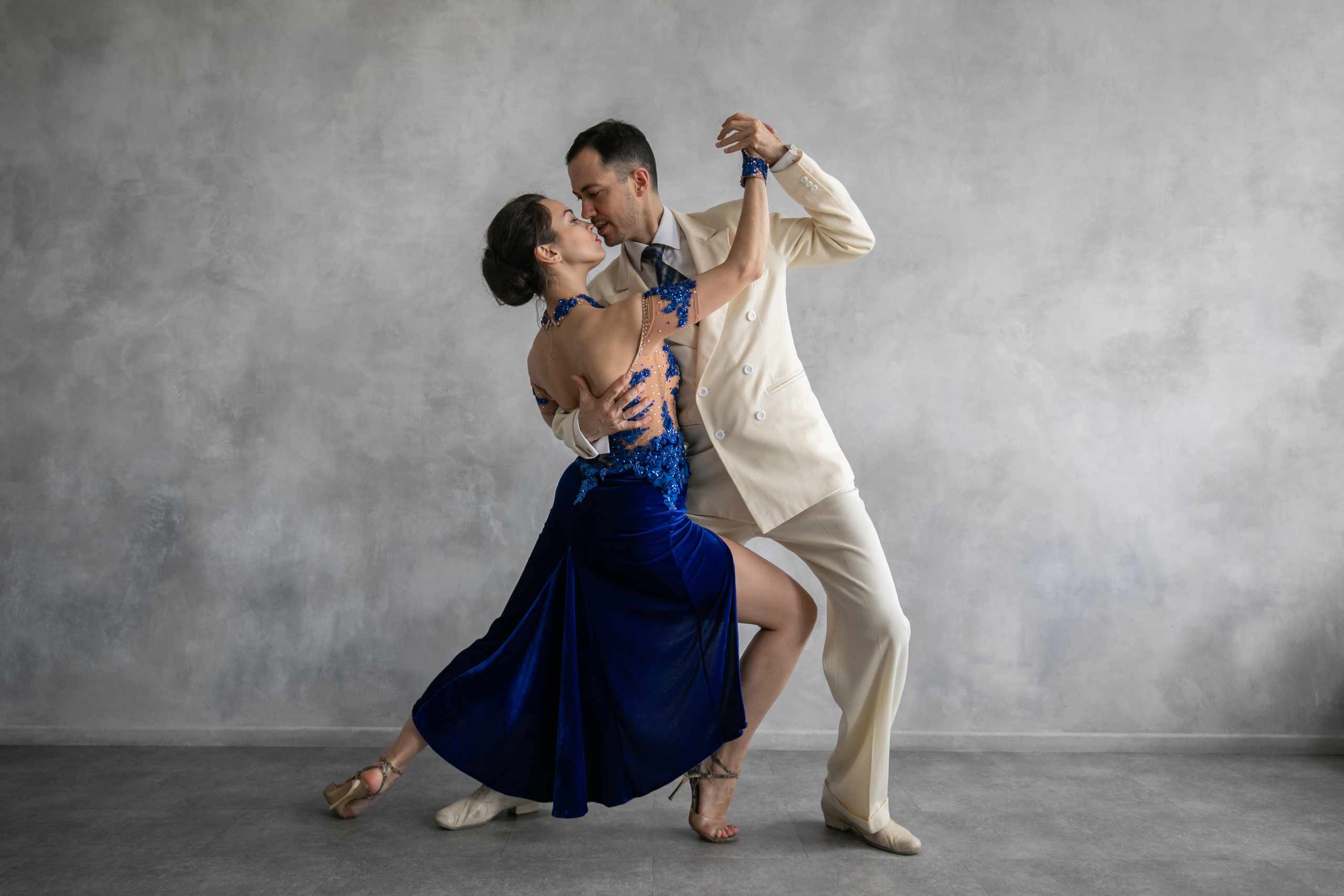
- And in close position, the steps can throw off the relative distance between partners. That might create some pressure points and tension in and between you and your partner. This is most obvious at arm and hand level, but there’s tension at many other points as each partner tries to compensate for the extra space the too big steps create.
The backward step in ballroom dancing can be just as tricky for many dancers. A backwards step that travels too far makes the dancer lean away from their partners.
If your steps are too big, it’s hard to control your dancing body, and you’ll find it difficult to connect with your partner and dance in a balanced, expressive frame together.
Sometimes a dancer’s goal is to make a dance figure look bigger. And it is true that well timed and balanced dancers can expand their dancing. But that doesn’t mean that size comes from reaching with their feet. Size comes naturally as the dancer is able to maintain control of posture and technique.
When to Try Smaller Steps
Try some steps that are smaller or more contained when:
- a dance figure feels hard to balance
- a dance figure feels rushed and you can’t get the weight transfers to finish smoothly within each count of the music
It’s easy to test this out. Practice a short piece of dance. Do it once without music, so you can get a feel for your step size. (Is it traveling too far for your turns? Are some of the steps too close, or too far away from your body center?)
Now do the same pattern, making sure to take smaller, more controlled steps. You might find that your balance improves, and that you can relax more because you don’t have to work so hard to get to and from each step. Your weight transfers will be smoother and the step timing is more relaxed. You can easily fit everything into the counts in the music, without rushing. You’ll feel a connection with your partner, and have the frame and the balance to send and receive signals through body direction, not pressure.
Now repeat the pattern to the music, again using those controlled steps. You should be able to dance the pattern with more control and timing. Try it a few times. You might start to get that figure and learn how to take it at just the right speed to cover the floor efficiently and make the figure look as big as it should.